

☀️ The sweet-spot months
May, June and September bring warm seas, thinner crowds and gentler prices. July–August is glorious but hot and busy; winter is quiet and cheap on the mainland.

Travel tips
A dozen honest tips to get you started. Want the full playbook for your exact trip? That part's personal — just ask.
Real advice, freely given. The deeper, trip-specific version — best dates for your islands, the exact ferries, the secret spots — comes when we talk.
May, June and September bring warm seas, thinner crowds and gentler prices. July–August is glorious but hot and busy; winter is quiet and cheap on the mainland.
In high season, book popular routes early. "Fast" catamarans cost more but save hours; conventional ferries are cheaper, calmer and often run when the wind picks up. Some routes only sail certain days.
Skip the tavernas on the main square with photo menus and a host waving you in. Walk two streets back — that's where the fish is fresh, the bill is fair and the family runs the kitchen.
Famous beaches earn their fame — but arrive before 10am or after 5pm and they transform. Better still, the quiet cove just around the headland is often the prettier one.
Cards work almost everywhere in towns, but carry some cash for small islands, village tavernas and kiosks. Tipping is appreciated, not expected — rounding up or leaving a euro or two is kind and normal.
Fly into Athens for the mainland and Cyclades; some islands have direct summer flights. A rental car unlocks the mainland (Meteora, the Peloponnese), while islands are best by ferry, scooter or a local driver.
These are the little truths that change a trip — the ones you only learn by living here.
EU visitors roam free on their home plan. Everyone else: a local eSIM (Cosmote, Vodafone or Nova) is cheap and easy. Coverage is strong on the islands — but expect a dead zone or two in the mountains.
Greece is one of Europe's safest places to travel — solo travellers and families included. Keep the usual eye on your bag in busy spots, and always carry water and sunscreen in summer.
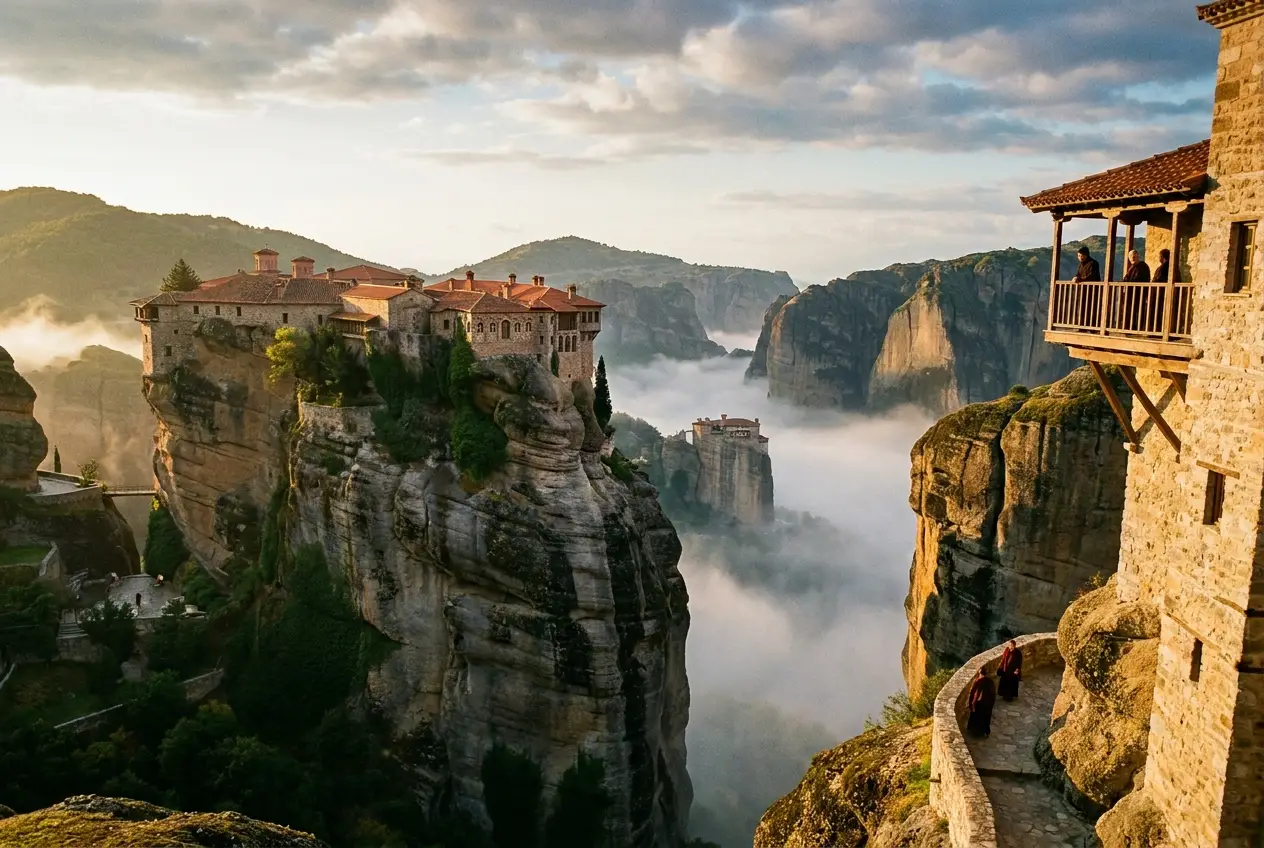
Dinner is late — locals sit down at 9pm. Say "kalimera" (good morning) and you'll get a warm welcome. At monasteries like Meteora, cover shoulders and knees (wraps are usually provided).
Stay within one island group — Cyclades, Ionian or Dodecanese — so ferries are short and frequent. Jumping between groups eats whole days. Two or three islands in ten days beats five in a blur.
In July and August a dry north wind — the meltemi — sweeps the Aegean. It cools the heat beautifully but can whip up the sea and delay fast ferries. The Ionian islands stay calmer if you want glassy water.
Many shops close for a few afternoon hours, especially on smaller islands, then reopen into the evening. Lean into it — an afternoon swim, a nap, then dinner under the stars. "Siga-siga" — slowly, slowly.
A hundred blogs will leave you more lost than before. Ten minutes by email and you'll have a plan that actually makes sense — built for your trip, not everyone's.
Tell me where you're headed and I'll send the advice that actually applies to you.